

This introductory course is designed for students with no previous programming experience who are eager to explore the field.
Its purpose is to reveal the logic and creative possibilities of programming while introducing the principal areas of information technology, the syntax of Python, and the language’s fundamental constructs.
Lecture broadcasts are open to everyone. Enrolled students may complete automatically assessed assignments and receive feedback from instructors throughout the semester.
The course is part of MSU’s broader sequence in artificial intelligence. It provides the tools required for further study, with subsequent offerings covering data analysis, machine learning, neural networks, and scientific computing.
This course introduces the foundations of programming in Python. Students become familiar with the language’s core structures and programming paradigms while gaining experience with tools for data analysis and visualization.
Its central objective is to establish a practical foundation for working with data through Python.
TOPICS INCLUDE
Lecture broadcasts are open to the wider university community. Enrolled students complete automatically assessed assignments and receive instructor feedback throughout the semester.
The course forms part of artificial intelligence sequence and is recommended alongside the online Mathematics for Data Analysis course. It prepares students to continue into machine learning, neural networks, and scientific computing.
The curriculum introduces the essential tools required for more advanced study in artificial intelligence and data science.
This offering forms part of the university’s artificial intelligence curriculum and serves as the practical companion to Programming & Data Analysis with Python at Lomonosov MSU.
Workshop-based sessions enable participants to apply concepts introduced in lectures to real problems drawn from their primary fields of study. The emphasis is on translating disciplinary questions into computational tasks and developing working solutions in Python.

Designed as the theoretical counterpart to Programming & Data Analysis with Python, this course provides the mathematical foundations required for advanced work in artificial intelligence and data science at Lomonosov MSU.
The first part focuses on numerical linear algebra; the second introduces the core principles of optimization.
CURRICULUM
1. Scalars, vectors, and matrices.
Fundamental operations, computational complexity, vector and matrix norms, and their properties.
2. Unitary matrices and low-rank approximation.
Matrix rank, singular value decomposition, multivariate function approximation, image compression, and recommender systems
3. Systems of linear equations.
Gaussian elimination, LU decomposition, inverse matrices, and condition numbers.
4. Sparse matrices and graph structures.
Storage formats, graph properties, and representative problems involving flows, cuts, and cliques
5. Iterative methods for large-scale linear systems.
Richardson, Chebyshev, and conjugate-gradient methods, together with the principles underlying their construction.
6. Eigenvalue problems and spectral methods.
Eigendecomposition, QR decomposition and the QR algorithm, the power method, clustering, and graph partitioning.
7. Tensors and tensor decompositions.
Tucker, canonical, and tensor-train decompositions, with applications in data compression and computational acceleration.
This course introduces one of today’s most consequential scientific fields: machine learning. Participants explore foundational approaches for addressing applied problems and develop a practical command of Python-based tools.
Open lecture broadcasts are available to the wider community. Formally enrolled students complete automatically assessed assignments and receive instructor feedback throughout the semester.
The course is part of Lomonosov MSU’s broader artificial intelligence sequence, created to give students access to current knowledge across AI and data science.
This course examines the foundations of deep learning and the use of neural networks across a range of computational tasks. Participants gain hands-on experience with contemporary models while developing an understanding of the theoretical principles behind neural computation.
Practical work spans natural language, computer vision, question-answering systems, and generative models.
Lecture broadcasts are open to all. Enrolled students complete automatically assessed assignments and receive guidance from instructors throughout the semester.
The course belongs to Lomonosov MSU’s artificial intelligence sequence and is recommended after prior study in Python programming and machine-learning fundamentals. The broader sequence provides an up-to-date foundation in artificial intelligence and data science.

Timofey F. Khiryanov
Programming Foundations and Data Analysis in Python

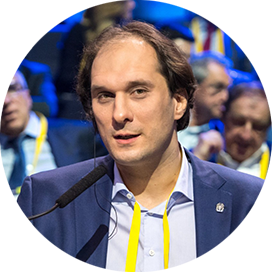
Ivan V. Oseledets
Mathematics for Data Analysis

Alexander M. Katruza
Mathematics for Data Analysis

Olga Migacheva
Project Lead and Instructor
Oversees the development and launch of new courses.
Education: Faculty of Computational Mathematics and Cybernetics, MSU

Sergey Artamonov
Instructor
Teaches Machine Learning for Applied Problem Solving and Introduction to Deep Learning and develops practice-based course materials and instructional assignments.
Education: Faculty of Mechanics and Mathematics, MSU

Oleg Gorokhov
Instructor
Teaches Introduction to Deep Learning and supports students in mastering theoretical material and completing course assignments.
Education: Faculty of Computational Mathematics and Cybernetics, MSU

Maksim Ivanov
Technical Coordinator for Python
Provides technical support for the course chatbot.
Education: Faculty of Computational Mathematics and Cybernetics, MSU

Olga Sushchenko
Project Manager
Education: Faculty of Sociology, MSU

Yulia Divid
Designer
Creates illustrations for the courses’ instructional materials.
Lomonosov MSU students register for university-wide courses through the MSU Student Portal at lk.msu.ru. Courses are open to students from every faculty, regardless of their field of study or specialization. Places in each class are limited.
Classes are held online on Wednesdays, either from 3:10–4:40 p.m. or 5:00–6:30 p.m., depending on the individual course schedule.
EXPLORE COURSE SCHEDULES